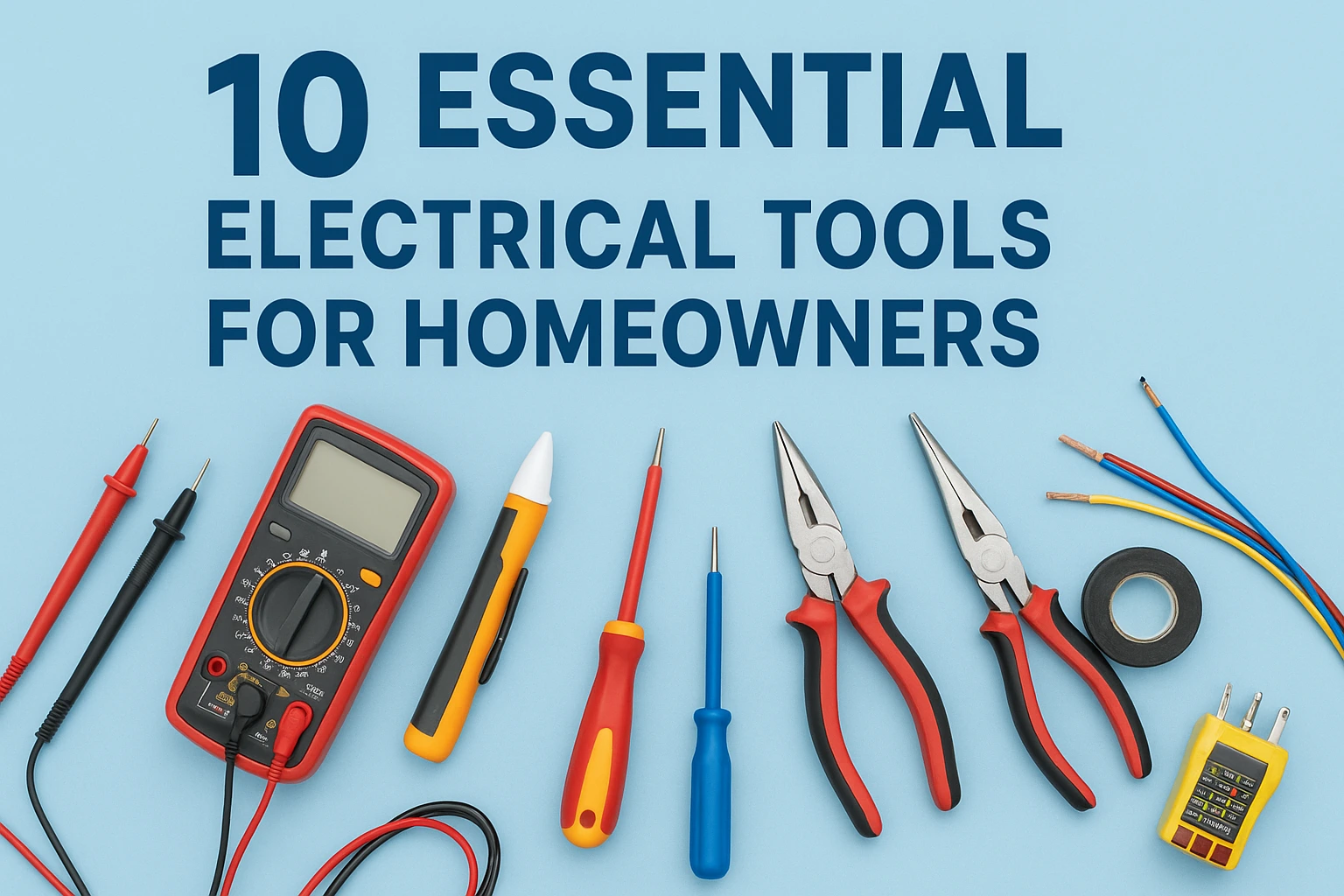
10 Essential Electrical Tools Every Homeowner Should Have
Whether you’re installing a light fixture, replacing an outlet, or troubleshooting a tripped breaker, having the right electrical tools can save you time, money, and frustration. You don’t need to be a professional electrician — but you do need a basic toolkit that lets you work safely and confidently.
In this guide, you’ll learn the 10 essential electrical tools every homeowner should own, how they work, when to use them, and what to look for when buying each one.
Table of Contents
Why Every Homeowner Needs Essential Electrical Tools
Electrical problems happen in every home: blown fuses, loose outlets, broken cords, faulty switches, and more. Calling an electrician for every small issue gets expensive — especially when many fixes are simple.
Having your own tools helps you:
- Solve simple electrical issues safely
- Save money on repairs
- Perform small upgrades (switches, lamps, outlets)
- Avoid dangerous guesswork
- Maintain your home without waiting for a technician
10 Essential Electrical Tools Every Homeowner Should Have
Below is the complete list — each tool explained in simple terms, with buying tips and safety advice.
1. Digital Multimeter (Must-Have Tool #1)
A digital multimeter (DMM) is the most important electrical tool you can own. It measures:
- Voltage (AC/DC)
- Current
- Resistance
- Continuity
Why You Need It
A multimeter helps you test outlets, switches, power supplies, chargers, batteries, and wires. If something isn’t working, this tool helps you find the problem immediately.
What to Look For
- Auto-range detection
- Large backlit display
- Non-contact voltage function (optional)
- Safety category rating CAT II or higher
2. Non-Contact Voltage Tester (Voltage Pen)
Also called a voltage detector, this tool tells you whether a wire is live without touching bare metal.
Why Homeowners Need It
Before you touch anything electrical, you must confirm that the power is off. This pen keeps you safe.
Buying Tips
- Audible + visual alerts
- Sensitivity adjustment
- Auto-shutoff
3. Wire Strippers
A wire stripper removes insulation from wires cleanly and safely. Cheap strippers crush the copper — good ones do not.
Why It’s Essential
You’ll need it for installing outlets, replacing switches, wiring lights, or repairing cables.
Look For
- Multiple gauge sizes
- Clean, sharp stripping holes
- Comfortable grip
4. Insulated Screwdrivers
Regular screwdrivers conduct electricity — insulated ones protect you from shocks.
Why Homeowners Need Them
Every electrical job involves screws: outlets, switches, breakers, fixtures, terminals.
Buying Tips
- VDE-certified insulation
- Magnetic tips
- A full set: flat, Phillips, and small precision
5. Electrical Tape (PVC Insulation Tape)
Electrical tape insulates exposed wires and protects connections from moisture and short circuits.
Why It’s a Must
Used in splicing, securing wire nuts, repairing cords, and bundling wires safely.
Good Tape Features
- Flame-resistant
- Strong adhesive
- UL-listed
6. Wire Nuts / Connectors
Wire nuts safely join two or more wires together.
Why Homeowners Need Them
Twisting wires by hand is unsafe — connectors make tight, secure, fire-safe connections.
Types
- Twist-on wire nuts
- Push-in Wago connectors (best for beginners)
7. Pliers (Needle-Nose + Lineman’s)
You need two types of pliers:
- Needle-nose: perfect for tight spaces, loops, and small wires
- Lineman’s pliers: strong, heavy, ideal for cutting and twisting wires
Why They’re Important
Pliers help you bend, pull, twist, cut, and grip electrical components.
8. Utility Knife
Used to cut insulation, strip cable jackets, or open electrical boxes and packaging.
What to Look For
- Retractable blade
- Anti-slip handle
- Extra blades storage
9. Electrical Tester Outlet Plug (Receptacle Tester)
This small device plugs into any outlet and instantly tells you:
- Open ground
- Open neutral
- Reversed polarity
- Correct wiring
- GFCI status
Why Homeowners Need It
Great for testing outlets in kitchens, bathrooms, garages, and outdoor areas.
10. Flashlight or Headlamp
Electrical work often means working in dark corners, behind appliances, or inside panels.
Why It’s Essential
You need clear visibility to stay safe.
Best Options
- Rechargeable LED
- Magnetic base
- Headlamp for hands-free work
🔧 Comparison Table: Essential Electrical Tools for Homeowners
| Tool | Main Function | Essential For | Safety Level |
|---|---|---|---|
| Digital Multimeter | Measure voltage, current, resistance | Troubleshooting | ⭐⭐⭐⭐ |
| Voltage Tester Pen | Detect live wires instantly | Safety checks | ⭐⭐⭐⭐⭐ |
| Wire Stripper | Remove insulation cleanly | Any wiring job | ⭐⭐⭐⭐ |
| Insulated Screwdrivers | Safe tightening/loosening | Outlets, switches | ⭐⭐⭐⭐⭐ |
| Electrical Tape | Insulate connections | Repairs | ⭐⭐⭐⭐ |
| Wire Nuts | Join wires safely | Splicing | ⭐⭐⭐⭐⭐ |
| Pliers | Cutting, gripping, twisting | All general tasks | ⭐⭐⭐⭐ |
| Utility Knife | Cable preparation | Installations | ⭐⭐⭐ |
| Outlet Tester | Test if outlet is safe | Home inspection | ⭐⭐⭐⭐⭐ |
| Flashlight | Visibility | Safety | ⭐⭐⭐⭐ |
⚡ Bonus Tools (Not Essential But Very Useful)
These tools are optional but highly recommended:
- Circuit breaker finder
- Cable toner/tracer
- Heat shrink tubing set
- Electrical fish tape
- Mini clamp meter
Let me know if you want a separate article for “Bonus Electrical Tools”.
❓ FAQ — Essential Electrical Tools for Homeowners
1. Do I need professional electrician tools as a homeowner?
No. A basic toolkit with safe, insulated tools is enough for small electrical tasks.
2. What is the first electrical tool I should buy?
A non-contact voltage tester — it keeps you safe from accidental shocks.
3. Can I do electrical work myself?
Yes, minor tasks like changing switches, outlets, and fixtures are safe if you follow proper procedures. Always shut off the power.
4. Should I buy cheap electrical tools?
Avoid cheap tools. They break easily and increase shock risk. Choose mid-range or reputable brands.
5. How do I store my electrical tools?
Keep them dry, organized, and away from children. Use an insulated tool bag for easy transport.
Conclusion
Having these 10 essential electrical tools gives every homeowner the confidence to handle small repairs, troubleshoot problems, and improve home safety. With the right tools — and basic knowledge — you can avoid expensive service calls and manage most simple electrical tasks on your own.