
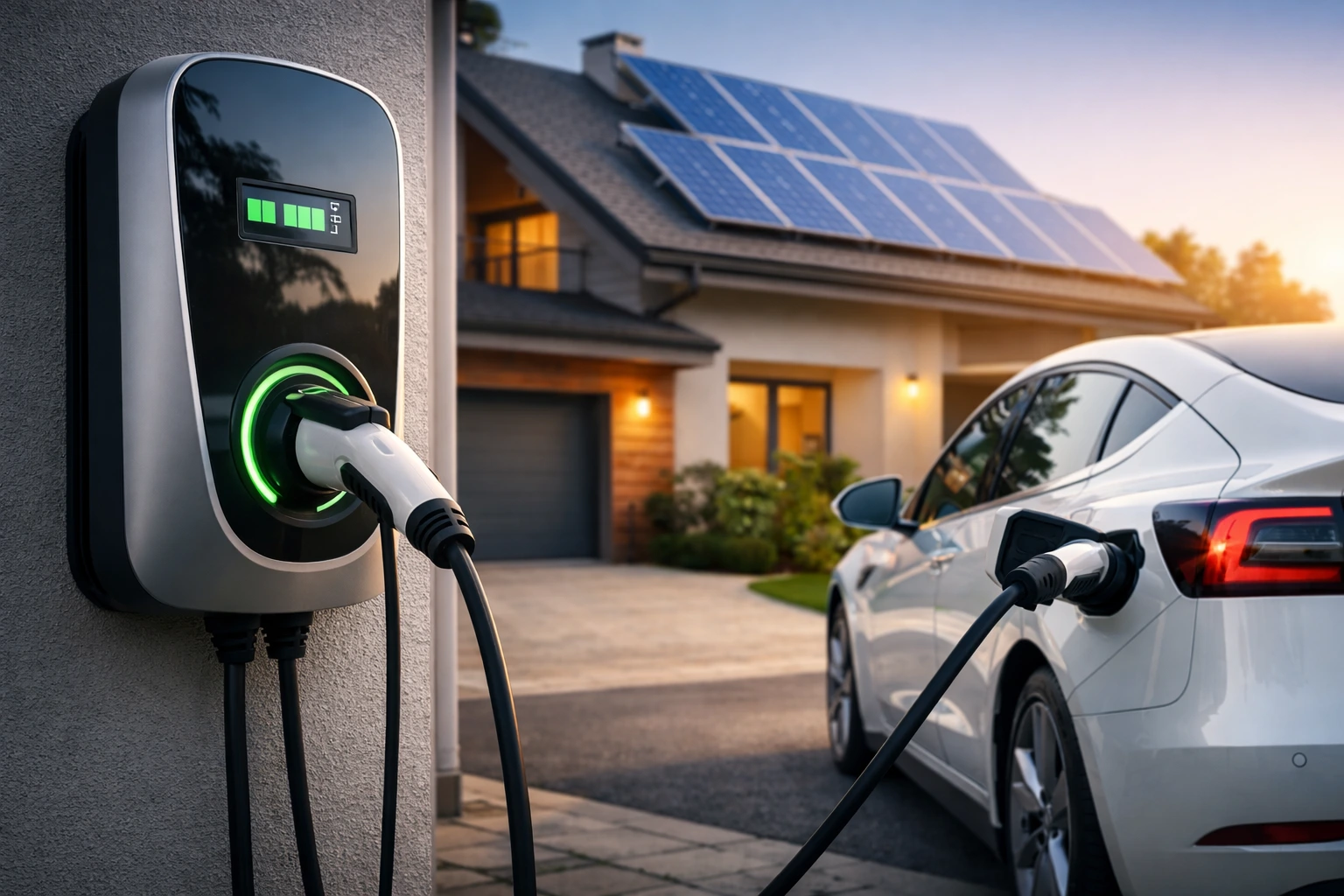
Home Charging Stations: The Complete Guide to Powering Your Electric Vehicle at Home
Electric vehicles are no longer a distant promise. They are already parked in your driveway, quietly reshaping how you think about energy, mobility, and independence. Yet owning an electric vehicle without a reliable home charging station often feels incomplete. You may find yourself planning routes around public chargers, checking availability late at night, or worrying about whether your battery will be ready in the morning.
A home charging station changes that reality entirely. It turns your home into a personal energy hub, giving you control, predictability, and long-term savings. This guide walks you step by step through everything you need to know—technically, economically, and practically—so you can make informed decisions with confidence.
Table of Contents
What Are Home Charging Stations for Electric Vehicles?
Understanding the Core Concept
A home charging station, technically known as Electric Vehicle Supply Equipment (EVSE), is a dedicated device that safely delivers electrical power from your home’s electrical system to your electric vehicle. Unlike a simple wall outlet, a home charging station actively manages current flow, communicates with your vehicle, and ensures that charging happens within safe electrical limits.
When you plug in your EV at home, the charging station does not “push” power blindly. Instead, it:
- Confirms grounding and electrical integrity
- Communicates with the vehicle’s onboard charger
- Delivers current only when all safety conditions are met
This intelligent interaction is what separates a certified home charging station from improvised charging solutions.
Why Home Charging Stations Matter for You
Charging at home is not just about convenience. It directly affects your daily routine, your energy costs, and even your vehicle’s long-term health.
When you rely on a home charging station, you gain:
- Predictable overnight charging
- Lower cost per kilowatt-hour
- Reduced battery stress compared to frequent fast charging
- Independence from public charging infrastructure
For most EV owners, over 80% of charging happens at home, simply because it aligns naturally with how you already live.
Types of Home Charging Stations (Level 1 vs Level 2)
Level 1 Home Charging Stations (120V)
Level 1 charging uses a standard household outlet, typically rated at 120 volts. Many electric vehicles include a portable Level 1 charger as standard equipment.
How Level 1 Charging Performs
- Adds roughly 5–8 km (3–5 miles) of range per hour
- Requires no electrical modifications
- Suitable only for very light daily driving
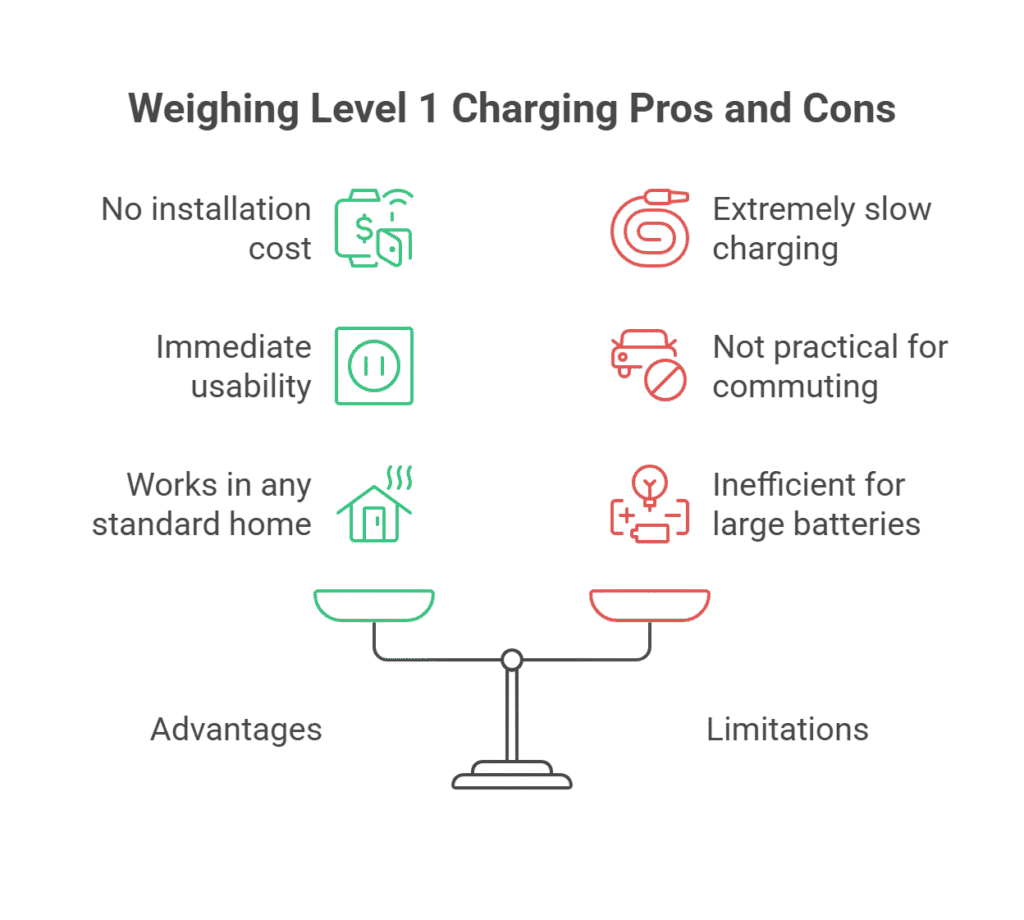
Advantages
- No installation cost
- Immediate usability
- Works in any standard home
Limitations
- Extremely slow charging
- Not practical for daily commuting
- Inefficient for larger battery packs
Level 1 charging is best seen as a temporary or backup solution, not a long-term strategy.
Level 2 Home Charging Stations (240V)
Level 2 charging stations operate on 240 volts and are the standard recommendation for residential EV charging.
Why Level 2 Is the Preferred Choice
- Adds 25–60 km (15–40 miles) of range per hour
- Fully charges most EVs overnight
- Supports higher efficiency and smarter energy control
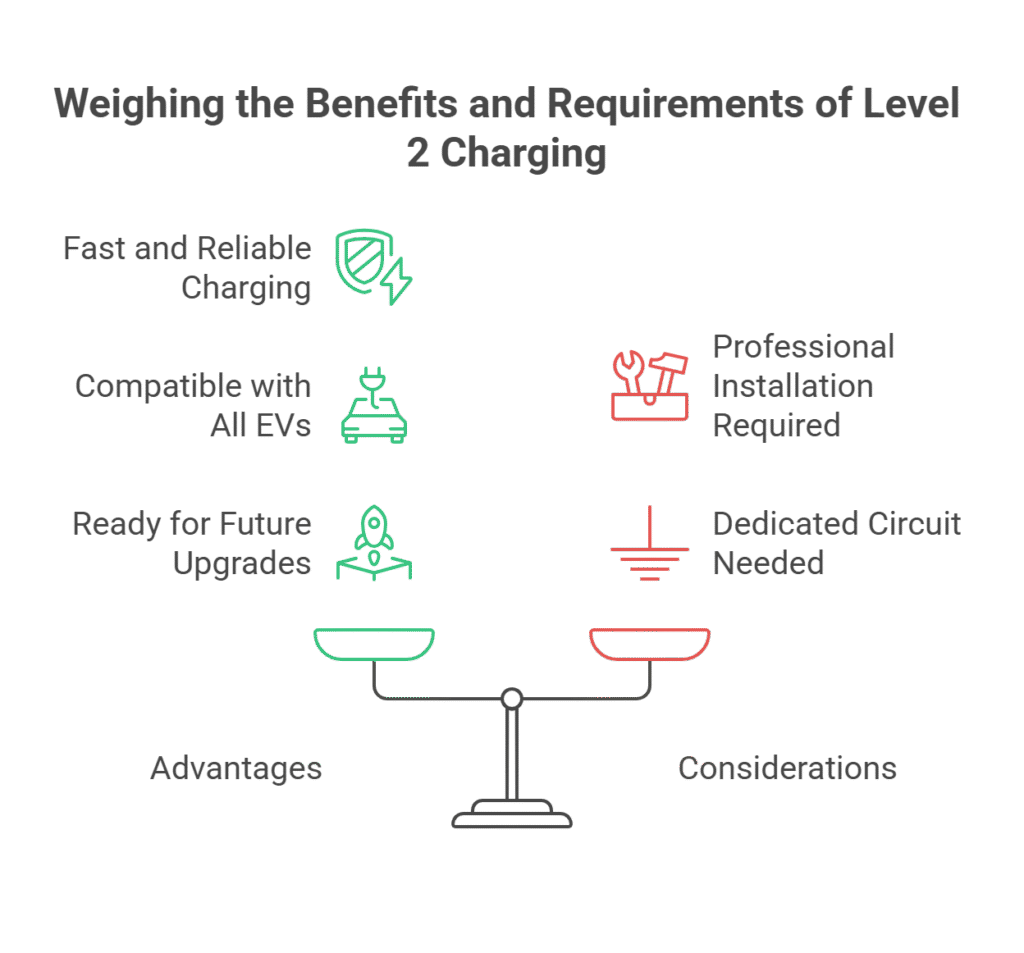
Advantages
- Fast and reliable
- Compatible with all modern EVs
- Ready for future vehicle upgrades
Considerations
- Requires professional installation
- Needs a dedicated circuit
Comparison Table: Level 1 vs Level 2 Home Charging Stations
| Feature | Level 1 Charging | Level 2 Charging |
|---|---|---|
| Voltage | 120V | 240V |
| Charging Speed | Very slow | Fast |
| Installation | Not required | Required |
| Daily EV Use | Limited | Ideal |
| Future-Proof | No | Yes |
How Home Charging Stations Work
The Electrical Process Explained Clearly
When you connect your EV to a home charging station, the process follows a controlled sequence:
- The station verifies proper earthing
- The vehicle and charger exchange safety signals
- Current delivery begins gradually
- Charging adjusts dynamically based on temperature and battery state
The actual battery charging happens inside your vehicle. The charging station’s role is to deliver stable, protected AC power and prevent electrical faults.
Smart vs Non-Smart Home Charging Stations
Modern home charging stations increasingly include smart features that improve efficiency and user control.
Smart Charging Capabilities
- Mobile app monitoring
- Scheduled charging during off-peak hours
- Energy consumption tracking
- Integration with solar systems
Why Smart Charging Matters to You
- Lower electricity bills
- Reduced grid stress
- Better alignment with renewable energy
Non-smart chargers still perform safely, but they lack the adaptability that modern energy systems demand.
Installation Requirements for Home Charging Stations
Electrical Panel and Load Capacity
Before installing a home charging station, your electrical system must be evaluated. This step is not optional.
Key factors include:
- Main panel rating (100A, 150A, or 200A)
- Existing household load
- Available breaker capacity
A proper load calculation ensures that your home charging station does not overload your system during peak usage.
Safety Standards and Compliance
Home charging stations must comply with established electrical safety standards.
Key Safety Requirements
- Dedicated circuit breaker
- Residual Current Device (RCD / GFCI)
- Proper earthing system
- Certified EVSE equipment
Ignoring these requirements increases the risk of:
- Overheating
- Nuisance tripping
- Fire hazards
Typical Electrical Requirements Table
| Component | Typical Requirement |
|---|---|
| Circuit Breaker | 32A–50A |
| Cable Size | 6–10 mm² |
| Protection | RCD Type A or B |
| Earthing | Mandatory |
Cost of Home Charging Stations and Installation
Equipment Costs
Home charging stations vary widely in price depending on features and power rating.
Typical Price Ranges
- Basic Level 2 charger: Entry-level pricing
- Smart charger with monitoring: Mid-range
- Premium solar-integrated charger: Higher-end
What matters most is certification and long-term reliability—not flashy design.
Installation Cost Factors
Installation costs depend on:
- Distance from electrical panel
- Wall material and routing
- Panel upgrades if required
While installation represents an upfront cost, it is a one-time investment that pays back through daily savings.
Long-Term Cost Comparison
Charging at home typically costs 50–70% less per kilometer compared to public fast charging. Over several years, this difference becomes substantial.
Home Charging Stations and Renewable Energy
Charging Your EV with Solar Power
If your home has solar panels, a home charging station becomes even more valuable.
Benefits include:
- Using self-generated electricity
- Reducing grid dependence
- Maximizing solar return on investment
Smart chargers can automatically align charging with solar production peaks.
Battery Storage Integration
Home battery systems allow you to:
- Store excess solar energy
- Charge your EV at night using stored power
- Reduce peak demand charges
This combination creates a resilient, future-ready energy system.
Common Mistakes When Installing Home Charging Stations
Avoiding these mistakes protects both your home and your vehicle:
- Undersized cables
- No load calculation
- Improper earthing
- Using uncertified chargers
- DIY installation without inspection
Each mistake increases long-term risk and maintenance costs.
Choosing the Right Home Charging Station for Your Needs
Key Selection Criteria
When selecting a home charging station, you should evaluate:
- Vehicle compatibility
- Maximum charging power
- Safety certifications
- Smart feature relevance
- Warranty and support
A slightly higher initial cost often results in better durability and flexibility.
Frequently Asked Questions About Home Charging Stations
Are home charging stations safe to use every day?
Yes. Certified home charging stations are designed for continuous daily use and include multiple layers of protection.
How long does it take to charge an EV with a home charging station?
Most EVs charge fully in 6–8 hours using a Level 2 home charging station.
Can any electrician install home charging stations?
You should choose an electrician experienced with EVSE installations and local electrical codes.
Do home charging stations increase property value?
Yes. Homes equipped with EV charging infrastructure are increasingly attractive to buyers.
Is a smart home charging station worth it?
If you care about energy optimization, cost control, or solar integration, a smart charger provides measurable benefits.
Conclusion: Why Home Charging Stations Define Modern EV Ownership
A home charging station is not just an accessory—it is the foundation of reliable electric vehicle ownership. It gives you autonomy, reduces long-term costs, protects your vehicle’s battery, and aligns your daily life with the future of energy.
When you install a properly designed home charging station, you are not simply charging a car. You are investing in resilience, efficiency, and control.
Call to Action
If you are planning to install a home charging station, take the next step today:
- Evaluate your electrical system
- Choose certified equipment
- Work with qualified professionals
Your electric vehicle deserves a charging solution that matches its technology. Start building that future now.