

How to Avoid Electrical Shock Accidents
Introduction: Why Electrical Safety Is Personal
You flip a switch. You plug in a phone charger. You start the coffee maker. Electricity powers almost every moment of your day, yet it’s something you rarely think about until something goes wrong. The truth is, one careless move—like using a frayed cord or touching a wet switch—can lead to a painful electrical shock, or worse, a life-threatening accident.
Electrical shocks don’t just leave a sting; they can burn skin, damage nerves, and even stop your heart. The scary part? Most electrical shock accidents happen at home, in places where you should feel safest. That’s why understanding how to avoid electrical shock accidents isn’t just important—it’s essential. This guide will walk you through the steps you can take right now to protect yourself, your family, and your home.
Table of Contents
Why Electrical Shock Safety Matters
Electrical safety may not always be on your mind, but ignoring it can have serious consequences.
- The numbers don’t lie: According to the Electrical Safety Foundation International (ESFI), thousands of people are injured every year due to household electrical shocks. Many of these injuries are preventable.
- Hidden dangers: Unlike a broken lock or a cracked window, electrical hazards are invisible. You can’t always see faulty wiring or overloaded circuits until it’s too late.
- Peace of mind: Taking a few simple steps today means fewer worries tomorrow. You’ll sleep better knowing your home is safe.
The stakes are high, but the solutions are simple. Once you recognize the risks, preventing accidents becomes second nature.
Common Causes of Electrical Shock Accidents
Before you can prevent electrical shocks, you need to know where they come from. Most accidents are caused by a handful of everyday situations.
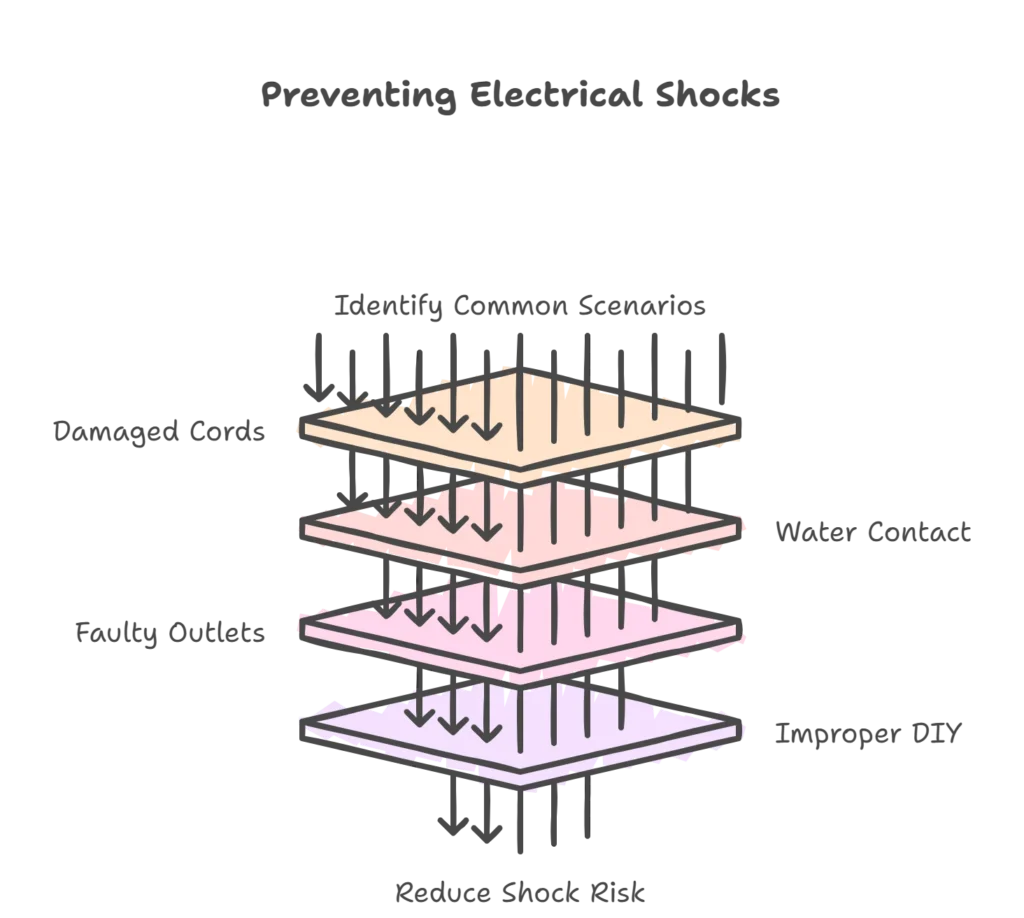
Damaged Electrical Cords and Plugs
- Frayed or cracked insulation exposes live wires.
- Plugs that wobble or spark when inserted are unsafe.
- Taping a damaged cord doesn’t solve the problem—it just hides it.
Contact with Water
- Wet hands, damp floors, or humid rooms increase conductivity.
- Bathrooms, kitchens, and basements are high-risk areas.
- Dropping appliances into water can be fatal.
Faulty Outlets and Appliances
- Outlets with black marks, buzzing sounds, or heat buildup signal trouble.
- Old appliances may have worn-out internal wiring.
Improper DIY Electrical Work
- Using the wrong gauge wire.
- Skipping proper grounding.
- Overloading breaker panels.
👉 Knowing these causes helps you avoid them before they cause harm.
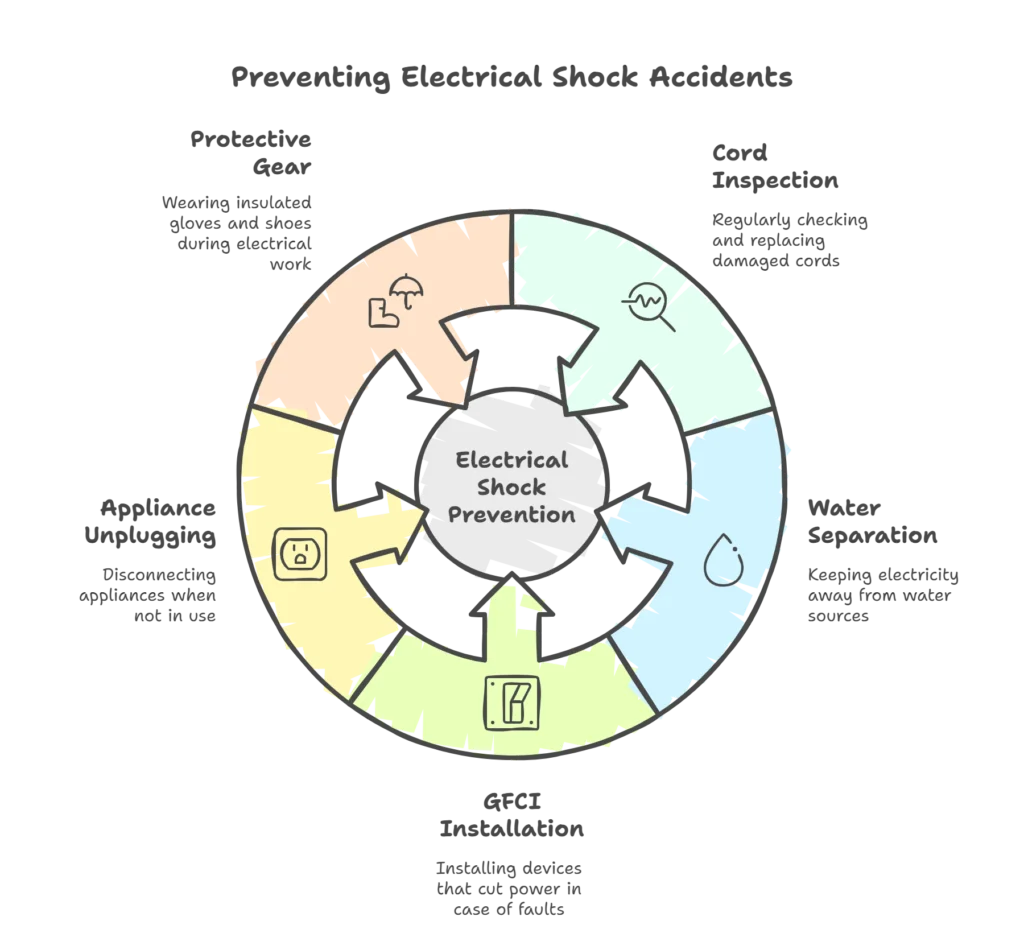
Practical Tips on How to Avoid Electrical Shock Accidents
Here’s where prevention gets practical. Small, consistent habits can make all the difference.
Inspect and Replace Damaged Cords
- Never use a cord with exposed wires or melted insulation.
- Replace cords instead of patching them with tape.
- Keep cords out of high-traffic areas to prevent wear.
Keep Electricity and Water Separate
- Always dry your hands before touching switches or plugs.
- Don’t place appliances near sinks, bathtubs, or wet counters.
- If an outlet is exposed to moisture, have it checked immediately.
Install Ground Fault Circuit Interrupters (GFCIs)
- GFCIs shut off power instantly when a fault is detected.
- Install them in bathrooms, kitchens, garages, and outdoor outlets.
- Press the “test” button monthly to ensure they’re working.
Unplug Appliances When Not in Use
- Prevents phantom energy use.
- Reduces risk of accidental shock if the appliance malfunctions.
Wear Protective Gear During Electrical Work
- Use insulated gloves and rubber-soled shoes.
- Stand on a dry, non-conductive surface.
- Even small projects deserve proper precautions.
Electrical Shock Prevention at Home vs. Workplace
| Home Safety Practices | Workplace Safety Practices |
|---|---|
| Use outlet covers for children | Follow OSHA electrical safety rules |
| Avoid overloading outlets | Train employees on safe practices |
| Inspect wiring every 3–5 years | Use lockout/tagout procedures |
| Keep water away from outlets | Provide protective equipment |
Both environments carry risks, but awareness and preparation make prevention possible.
Advanced Electrical Safety Practices
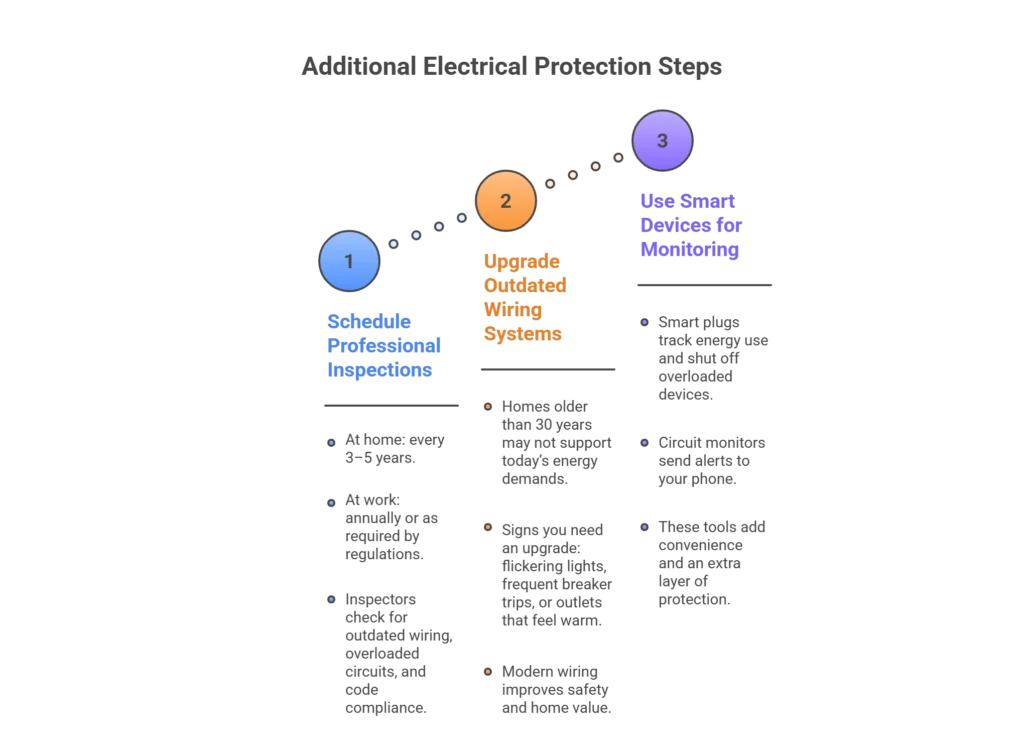
Once you’ve covered the basics, consider these additional steps for extra protection.
Schedule Professional Inspections
- At home: every 3–5 years.
- At work: annually or as required by regulations.
- Inspectors check for outdated wiring, overloaded circuits, and code compliance.
Upgrade Outdated Wiring Systems
- Homes older than 30 years may not support today’s energy demands.
- Signs you need an upgrade: flickering lights, frequent breaker trips, or outlets that feel warm.
- Modern wiring improves safety and home value.
Use Smart Devices for Monitoring
- Smart plugs track energy use and shut off overloaded devices.
- Circuit monitors send alerts to your phone.
- These tools add convenience and an extra layer of protection.
First Aid Tips If Electrical Shock Occurs
Even with precautions, accidents can still happen. Knowing what to do could save a life.
Immediate Steps
- Do not touch the person directly until the power is off.
- Cut the power supply at the breaker if possible.
- Use a wooden or plastic object to move the victim away from the source.
- Call emergency services immediately.
Aftercare
- Seek medical attention, even if the shock seems mild.
- Watch for delayed symptoms: numbness, irregular heartbeat, confusion.
Frequently Asked Questions – How to Avoid Electrical Shock Accidents
What is the most common cause of electrical shock accidents?
Most shocks are caused by damaged cords, faulty outlets, or mixing electricity with water.
Can I prevent electrical shock at home?
Yes. Inspect cords, install GFCIs, keep appliances away from water, and schedule inspections.
What should I do if someone gets shocked?
Turn off the power, call emergency services, and avoid direct contact with the victim.
Are small shocks dangerous?
Even mild shocks can be warning signs of bigger electrical issues. Don’t ignore them.
Conclusion – Make Electrical Safety a Daily Habit
Electrical shock accidents don’t happen because people don’t care—they happen because people underestimate the risks. By paying attention, forming safe habits, and making small changes, you greatly reduce the chances of something going wrong.
Your home and workplace should be places of comfort, not hidden danger zones. Start simple: check your cords, test your GFCIs, and unplug devices when not in use. If something doesn’t feel right, trust your instincts and call a professional.