Morocco’s Power Grid to Accommodate 9,338 MW of Renewable Energy by 2029: What It Means for the Energy Sector
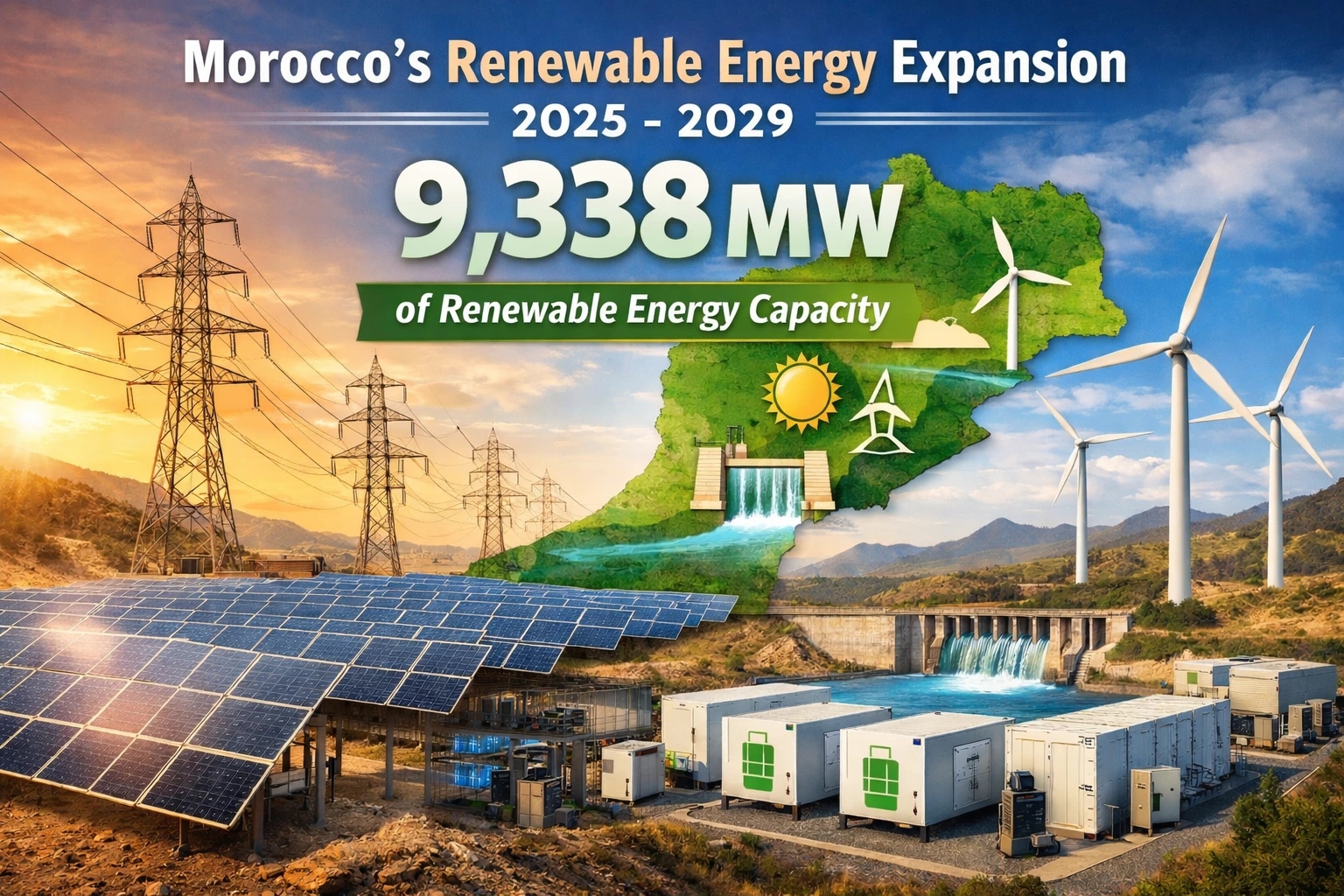
Morocco is entering a decisive phase in its energy transition. Between 2025 and 2029, the national power grid is expected to accommodate approximately 9,338 MW of new renewable energy capacity, a major step toward reducing fossil fuel dependence and strengthening energy security.
This development is not only a policy milestone—it is a technical and economic transformation that will reshape power generation, transmission, and distribution across the country.
In this article, you will understand what this capacity increase means, how Morocco’s grid is preparing for it, and the opportunities it creates for the electrical industry.
Table of Contents
Morocco’s Renewable Energy Vision: The Big Picture
Morocco has long positioned itself as a regional leader in renewable energy, driven by three strategic objectives:
- Reduce dependence on imported fossil fuels
- Improve energy security and grid resilience
- Meet climate and decarbonization commitments
The new 9,338 MW grid hosting capacity represents a significant acceleration of this strategy, building on earlier investments in solar, wind, and hydroelectric power.
By 2029, renewables are expected to play a central role in the national electricity mix, with increasing participation from private producers and independent power producers (IPPs).
What Does “Grid Hosting Capacity” Mean?
Grid hosting capacity refers to the maximum amount of renewable generation the electrical system can integrate without compromising stability, reliability, or power quality.
Accommodating 9,338 MW means that Morocco’s grid must be capable of handling:
- Variable generation from solar and wind
- Bidirectional power flows
- Voltage and frequency fluctuations
- Increased connection points across regions
This is not just about adding power plants—it is about modernizing the entire electrical infrastructure.
Breakdown of Renewable Energy Sources
The planned capacity between 2025 and 2029 is expected to come mainly from:
Solar Energy
- Utility-scale photovoltaic (PV) plants
- Concentrated Solar Power (CSP) with thermal storage
- Industrial and commercial rooftop installations
Wind Energy
- Onshore wind farms in high-potential regions
- Grid-connected projects developed by private operators
Hydropower and Storage
- Pumped storage plants to balance intermittent renewables
- Modernization of existing hydro facilities
Together, these sources will require advanced grid management and flexibility solutions.
Grid Upgrades Required to Integrate 9,338 MW
To successfully absorb this renewable capacity, Morocco is investing in critical grid enhancements, including:
1. Transmission Network Reinforcement
- New high-voltage lines (225 kV and 400 kV)
- Reinforcement of north–south and coastal corridors
- Improved interconnections between renewable zones and load centers
2. Smart Grid Technologies
- Digital substations
- Real-time monitoring and SCADA systems
- Advanced protection and automation schemes
3. Energy Storage Integration
- Battery Energy Storage Systems (BESS)
- Pumped hydro storage
- Hybrid solar + storage plants
These upgrades are essential to maintain grid stability and reliability as renewable penetration increases.
Impact on the Electrical and Industrial Sector
This expansion creates significant opportunities across the electrical value chain:
- Transformers, switchgear, and protection equipment demand
- Medium- and high-voltage installation projects
- Power electronics (inverters, converters, STATCOMs)
- Grid engineering, commissioning, and maintenance services
For electricians, engineers, and electrical contractors, this transition means new skills, standards, and business opportunities aligned with IEC and international grid codes.
Challenges Ahead
While the outlook is positive, several challenges must be addressed:
- Managing intermittency and peak demand
- Ensuring grid code compliance for renewable producers
- Training technical personnel for advanced grid systems
- Coordinating between public utilities and private developers
Addressing these challenges will determine how efficiently the 9,338 MW target is achieved.
What This Means for Morocco’s Energy Future
By preparing its grid to accommodate 9,338 MW of renewable energy between 2025 and 2029, Morocco is laying the foundation for:
- A cleaner and more resilient power system
- Reduced electricity production costs over time
- Increased attractiveness for foreign energy investment
- Leadership in Africa’s energy transition
This transformation positions Morocco not only as a renewable energy producer, but as a modern power system operator ready for the future.
Final Thoughts
Morocco’s grid expansion plan is more than an infrastructure project—it is a strategic shift toward a smarter, greener, and more reliable electrical system.
For professionals in the electrical sector, now is the time to understand grid requirements, renewable integration standards, and emerging technologies that will define the next decade.
If you want to stay updated on power grids, transformers, IEC standards, and renewable integration, explore more technical insights on Zoneleec Tools.