
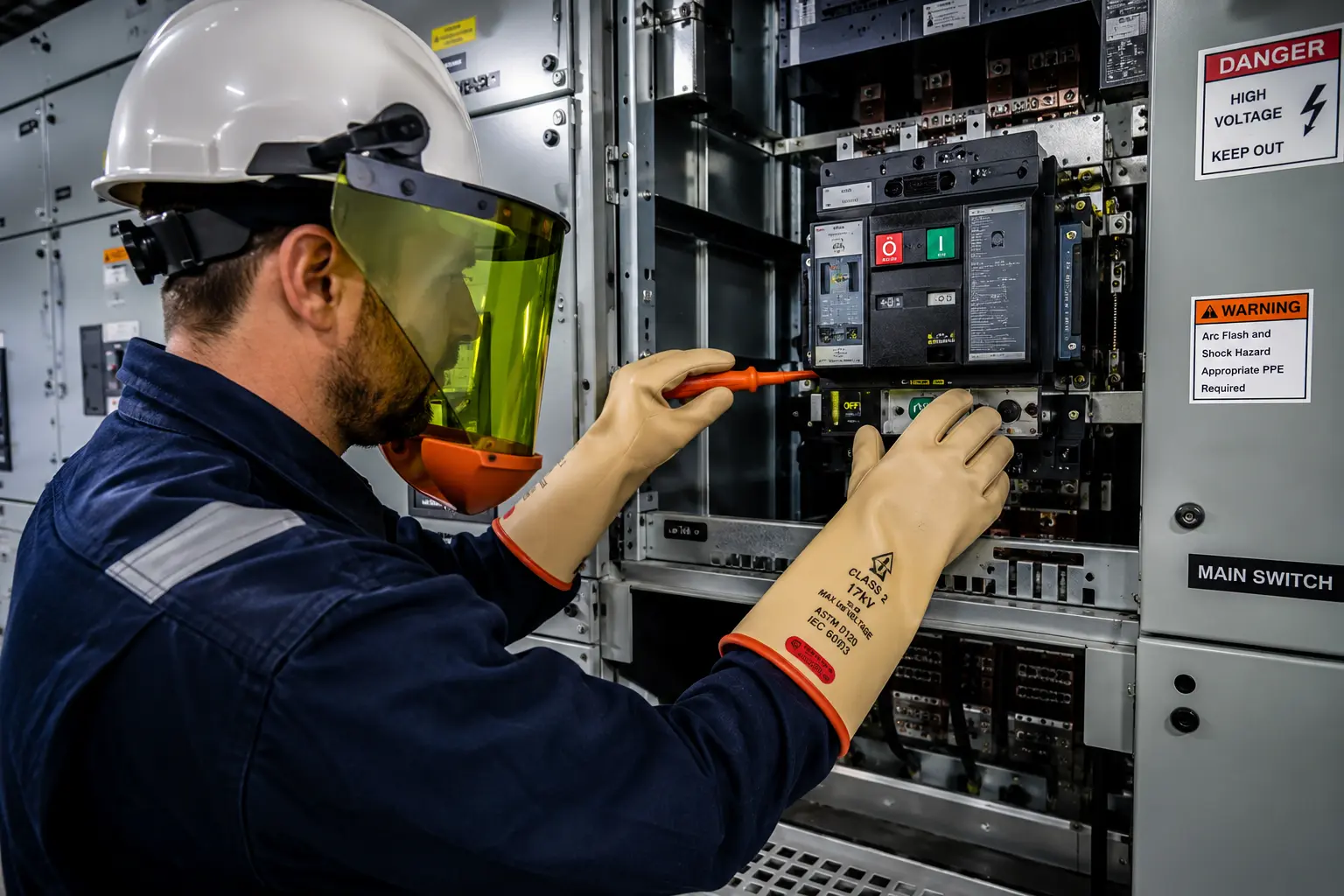
How to Choose Electrical Gloves: 2026 Complete Engineering Guide
Electrical work remains one of the most hazardous occupations worldwide. Whether you are installing a residential distribution board, maintaining industrial switchgear, troubleshooting motor control centers, or servicing high-voltage substations, accidental contact with energized conductors can cause severe injury or death within milliseconds.
One of the most important pieces of Personal Protective Equipment (PPE) is Electrical Gloves. These specialized insulating gloves form the first line of defense against electric shock, arc flash hazards, and accidental contact with energized parts.
However, selecting the correct glove is not as simple as buying the thickest pair available. Different voltage levels require different insulation classes, testing requirements, leather protectors, and inspection procedures. Choosing the wrong glove can provide a false sense of security while exposing workers to potentially fatal electrical hazards.
This comprehensive 2026 engineering guide explains everything professionals need to know about Electrical Gloves, including insulation classes, international standards, inspection procedures, maintenance, storage, testing, and practical selection methods for residential, commercial, industrial, and utility applications.
Table of Contents
Why Electrical Gloves Are Essential
Electric current follows every available conductive path. The human body becomes an excellent conductor whenever skin resistance decreases due to:
- Sweat
- Rain
- High humidity
- Cuts or abrasions
- Metal jewelry
- Contaminated gloves
Even relatively low voltages can produce dangerous current through the body.
Electrical insulating gloves provide:
- Protection against electric shock
- Reduced risk of burns
- Compliance with workplace safety regulations
- Protection during troubleshooting
- Safe energized maintenance
- Increased worker confidence
Electrical gloves should always be considered part of a complete PPE system rather than a standalone safety solution.
Understanding How Electrical Gloves Work
Electrical gloves are manufactured from highly insulating elastomer materials such as:
- Natural rubber
- Synthetic rubber
- Elastomer compounds
These materials possess extremely high dielectric strength, preventing current from passing through the glove when used within its rated voltage.
Unlike ordinary work gloves, electrical insulating gloves are specifically engineered to:
- Resist electrical breakdown
- Maintain flexibility
- Prevent cracking
- Resist ozone damage
- Withstand environmental aging
- Maintain dielectric properties over time
Most professional electrical gloves are manufactured using seamless molding techniques that eliminate weak points.
Electrical Glove Standards You Should Know
Selecting compliant gloves requires understanding several important standards.
ASTM Standards
In North America, ASTM D120 specifies requirements for:
- Rubber insulating gloves
- Manufacturing quality
- Dielectric testing
- Physical properties
- Labeling
- Classification
It is the primary manufacturing standard for insulating gloves.
IEC Standards
European countries commonly follow:
This international standard specifies:
- Voltage classes
- Testing procedures
- Material performance
- Mechanical requirements
- Inspection requirements
IEC glove classifications closely resemble ASTM voltage classes.
IEEE Recommendations
IEEE publications provide engineering guidance for:
- Live-line maintenance
- Utility work
- High-voltage safety
- Maintenance procedures
- Testing practices
Many utility companies build their electrical safety procedures around IEEE recommendations.
NEC Requirements
The National Electrical Code (NEC) does not specify glove classes directly but requires safe work practices when working near energized equipment. Compliance is generally achieved through PPE requirements established under workplace electrical safety programs, often alongside NFPA 70E and employer procedures.
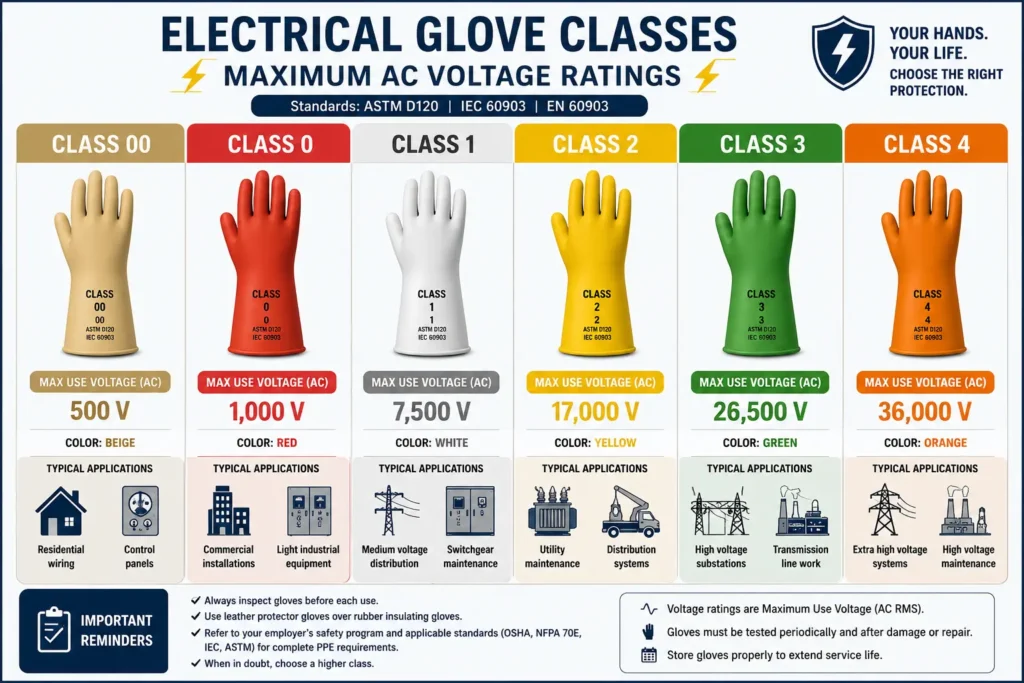
Electrical Glove Voltage Classes
One of the most important considerations is selecting the correct glove class.
| Glove Class | Maximum Use Voltage (AC) | Typical Applications |
|---|---|---|
| Class 00 | 500 V | Residential wiring, control panels |
| Class 0 | 1,000 V | Commercial installations |
| Class 1 | 7,500 V | Medium-voltage distribution |
| Class 2 | 17,000 V | Utility systems |
| Class 3 | 26,500 V | High-voltage substations |
| Class 4 | 36,000 V | Transmission maintenance |
Higher voltage classes generally feature:
- Increased insulation thickness
- Greater dielectric strength
- Higher weight
- Reduced flexibility
Choosing the lowest suitable class for the task often improves dexterity while maintaining safety.
Color Coding of Electrical Gloves
Manufacturers often use color coding to identify voltage classes.
| Class | Common Color |
|---|---|
| 00 | Beige |
| 0 | Red |
| 1 | White |
| 2 | Yellow |
| 3 | Green |
| 4 | Orange |
Always verify the permanent markings on the glove rather than relying solely on color, as colors may vary between manufacturers.
Types of Electrical Gloves
1. Rubber Insulating Gloves
These provide primary electrical protection.
Suitable for:
- Live electrical work
- Testing
- Switching operations
- Maintenance
2. Leather Protector Gloves
Leather protectors are worn over insulating gloves to prevent:
- Cuts
- Punctures
- Abrasion
- Mechanical damage
They do not provide electrical insulation and should never be used alone where electrical insulation is required.
3. Arc Flash Gloves
Designed primarily for:
- Thermal protection
- Arc flash hazards
- Heat resistance
Some arc-rated gloves combine thermal and electrical protection, but not all arc flash gloves are electrically insulating. Always verify the glove’s certification for the intended hazard.
4. Composite Gloves
Some modern gloves combine:
- Electrical insulation
- Arc flash protection
- Mechanical resistance
These are increasingly popular in industrial maintenance.
How to Choose Electrical Gloves
Selecting the correct glove involves more than matching voltage ratings.
Consider the following:
Step 1: Identify Maximum System Voltage
Always determine:
- Nominal voltage
- Maximum operating voltage
- Possible transient conditions
Step 2: Determine the Work Type
Examples include:
- Troubleshooting
- Installation
- Switching
- Testing
- Preventive maintenance
- Live-line work
Different tasks require different PPE combinations.
Step 3: Evaluate Environmental Conditions
Consider:
- Rain
- Heat
- Oil exposure
- Chemical contamination
- Sharp edges
- Confined spaces
Environmental hazards may influence glove material selection and the need for additional protective equipment.
Step 4: Verify Compliance
Check certification markings for applicable standards such as:
- ASTM D120
- IEC 60903
Also ensure gloves are suitable for your employer’s safety program and applicable regulations.
Step 5: Choose Proper Size
Oversized gloves:
- Reduce dexterity
- Increase snagging risk
Undersized gloves:
- Cause fatigue
- Increase tearing risk
- Reduce comfort
A proper fit improves both safety and productivity.
Inspection Before Every Use
Every pair of electrical gloves must be inspected before use.
Check for:
- Cracks
- Holes
- Cuts
- Embedded metal
- Abrasion
- UV damage
- Ozone cracking
- Chemical contamination
- Sticky surfaces
- Hardening
- Swelling
Air Inflation Test
A simple field inspection involves trapping air inside the glove by rolling or folding the cuff to gently inflate it.
Rotate the glove while listening and feeling for escaping air.
If any leak is detected:
Remove the glove from service immediately.
Electrical Glove Testing Requirements
Visual inspection alone is not enough.
Professional dielectric testing verifies insulation integrity.
Testing generally includes:
- AC proof testing
- Leakage current measurement
- Visual inspection
- Mechanical inspection
Many employers follow periodic testing intervals based on applicable standards and internal safety programs. Gloves should also be tested after repair, suspected damage, or extended storage before being returned to service.
Proper Storage
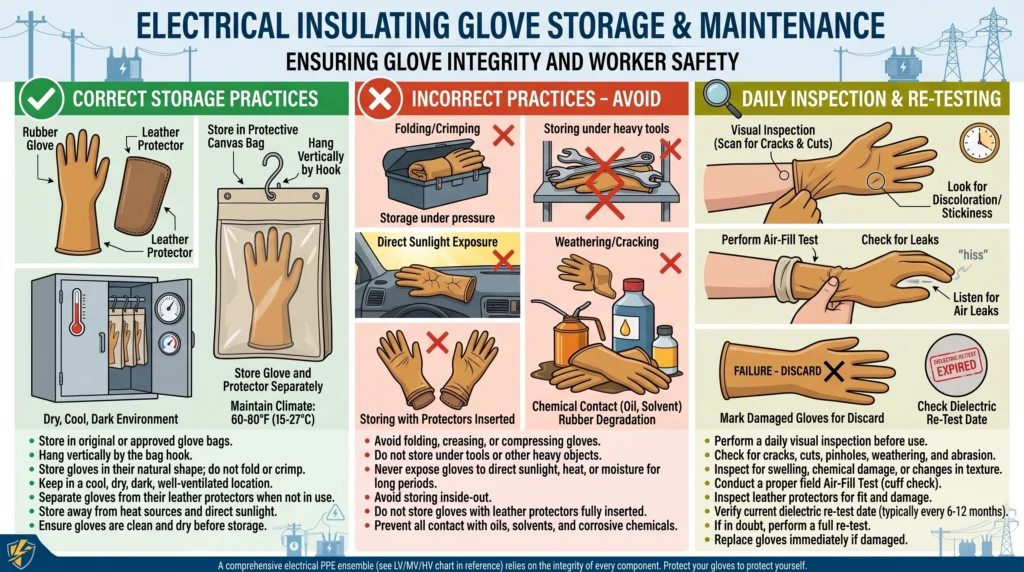
Incorrect storage significantly shortens glove life.
Store gloves:
- In protective bags
- Away from sunlight
- Away from ozone sources
- Away from electric motors
- Away from chemicals
- In cool environments
- Without folding
- Without heavy objects placed on top
Proper storage preserves the insulating properties of the rubber.
Cleaning Electrical Gloves
Only use approved cleaning methods.
Recommended practices include:
- Mild soap
- Clean water
- Soft cloth
- Air drying
Avoid:
- Solvents
- Petroleum products
- Gasoline
- Harsh detergents
- Abrasive brushes
Contaminants can degrade insulating materials over time.
Engineering Example 1
Residential Service Panel Upgrade
System Voltage:
240 V
Required PPE:
- Class 00 Electrical Gloves
- Leather protectors
- Safety glasses
- Arc-rated clothing where required
- Insulated tools
Although the voltage is relatively low, accidental contact across phases or between phase and ground can still result in serious injury.
Engineering Example 2
Industrial Motor Control Center
System Voltage:
480 V
Recommended PPE:
- Class 00 or Class 0 Electrical Gloves (based on the employer’s hazard assessment and applicable procedures)
- Leather protectors
- Arc-rated face shield
- Flame-resistant clothing
- Safety footwear
Motor control centers often contain exposed energized components during troubleshooting.
Engineering Example 3
Utility Distribution Maintenance
System Voltage:
13.8 kV
Typical PPE:
- Class 2 insulating gloves
- Leather protectors
- Arc-rated clothing
- Insulated sleeves where required
- Hard hat
- Face protection
Only trained and authorized personnel should perform energized medium-voltage work.
Comparison Table: Electrical Gloves vs Ordinary Work Gloves
| Feature | Electrical Gloves | Work Gloves |
|---|---|---|
| Electrical insulation | Yes | No |
| Dielectric tested | Yes | No |
| Voltage rating | Yes | No |
| ASTM/IEC compliance | Yes | No |
| Shock protection | Yes | No |
| Mechanical protection | Moderate (with protectors) | High |
| Safe for energized work | Yes (when properly rated and maintained) | No |
Comparison Table: Rubber Gloves vs Composite Gloves
| Feature | Rubber Gloves | Composite Gloves |
|---|---|---|
| Electrical insulation | Excellent | Excellent (if certified) |
| Arc protection | Limited | Higher |
| Mechanical protection | Requires leather protector | Often improved |
| Weight | Lower | Slightly higher |
| Cost | Lower | Higher |
Common Mistakes When Using Electrical Gloves
Many electrical incidents result from improper glove use rather than glove failure.
Common mistakes include:
- Using expired gloves without required testing
- Skipping visual inspections
- Wearing damaged gloves
- Not using leather protectors when required
- Using the wrong voltage class
- Storing gloves in direct sunlight
- Folding gloves during storage
- Contact with oils or solvents
- Assuming all insulated-looking gloves are electrically rated
- Wearing metal jewelry beneath gloves
Avoiding these errors significantly improves worker safety.
Safety Considerations
Electrical gloves should always be used as part of a complete electrical safety program.
Best practices include:
- Perform lockout/tagout whenever possible.
- De-energize equipment before beginning work whenever feasible.
- Verify absence of voltage using properly rated test instruments.
- Inspect gloves before every use.
- Wear leather protectors over rubber insulating gloves when required.
- Replace damaged gloves immediately.
- Follow your organization’s energized work procedures.
- Use insulated tools in conjunction with insulating gloves.
- Ensure all PPE is compatible with the task and hazard assessment.
Remember that electrical gloves reduce risk but do not eliminate it. Safe work planning, training, and adherence to established procedures remain essential.
Frequently Asked Questions (FAQs)
1. Can electrical gloves prevent electric shock completely?
They significantly reduce the risk of electric shock when properly selected, inspected, maintained, and used within their rated voltage. No PPE can compensate for unsafe work practices.
2. Can I use leather gloves alone?
No. Leather gloves provide mechanical protection only and are not electrically insulating.
3. How do I know which glove class I need?
Select a glove with a maximum-use voltage appropriate for the system voltage and your employer’s hazard assessment. Always follow applicable standards and site procedures.
4. Should gloves be inspected before every job?
Yes. A visual inspection and an air inflation check should be performed before each use.
5. Can electrical gloves get wet?
Moisture and contamination can affect safe use. Follow the manufacturer’s instructions regarding use in wet conditions and inspect gloves carefully before use.
6. Are electrical gloves reusable?
Yes, provided they remain undamaged, pass required inspections and dielectric testing, and have not exceeded applicable service requirements.
7. Do electrical gloves expire?
Rubber insulating gloves are subject to inspection and periodic testing requirements. Remove them from service if they fail inspection or testing, or if they show signs of deterioration.
8. Can I wear insulating gloves without leather protectors?
For many applications, leather protectors are required to protect the insulating rubber from mechanical damage. Follow the glove manufacturer’s instructions and applicable standards for your specific glove class and task.
Conclusion
Choosing the right Electrical Gloves is one of the most critical decisions an electrician, technician, engineer, or industrial maintenance professional can make. The correct glove selection depends on system voltage, task type, environmental conditions, applicable standards, and proper inspection practices.
By understanding glove classes, dielectric ratings, inspection methods, testing requirements, and storage procedures, professionals can dramatically reduce the risk of electrical shock and improve workplace safety. High-quality insulating gloves, combined with leather protectors, insulated tools, arc-rated PPE, and disciplined safe work practices, form the foundation of effective electrical hazard protection.
As electrical systems continue to evolve in 2026 with the growth of renewable energy, EV infrastructure, battery storage, and smart grids, investing in properly selected and maintained electrical gloves remains an essential component of every electrical safety program.